CR1632 Battery vs CR2032: Differences in Size, Capacity, and Applications
The CR1632 is the smaller cell with lower capacity. The CR2032 is larger and holds more energy. Both are 3V lithium coin cells, and they look almost identical at a glance. That similarity explains why people mix them up so often. This comparison covers size, capacity, and applications. You will see exactly where each cell fits and which one your device needs. A CR1632 Battery suits compact gadgets, while a CR2032 powers larger ones. Read on to match the right cell to your equipment.
Key Takeaways
The CR1632 is 16 mm wide and the CR2032 is 20 mm wide. Both are 3.2 mm thick and 3V. Always match the cell size to your device's holder.
The CR2032 stores more energy (about 225 mAh) than the CR1632 (about 140 mAh). A higher mAh rating usually means longer battery life under the same load.
Use the CR1632 in small devices like watches and key fobs. Use the CR2032 in larger devices like motherboards and small flashlights.
Never swap these cells. A wrong size can damage contacts or cause a loose connection. Check your device label or manual for the correct model.
Store coin cells safely and keep them away from children. A swallowed cell needs immediate medical help. Call 800-498-8666 for guidance.
CR1632 Battery Size vs CR2032
Diameter and Thickness
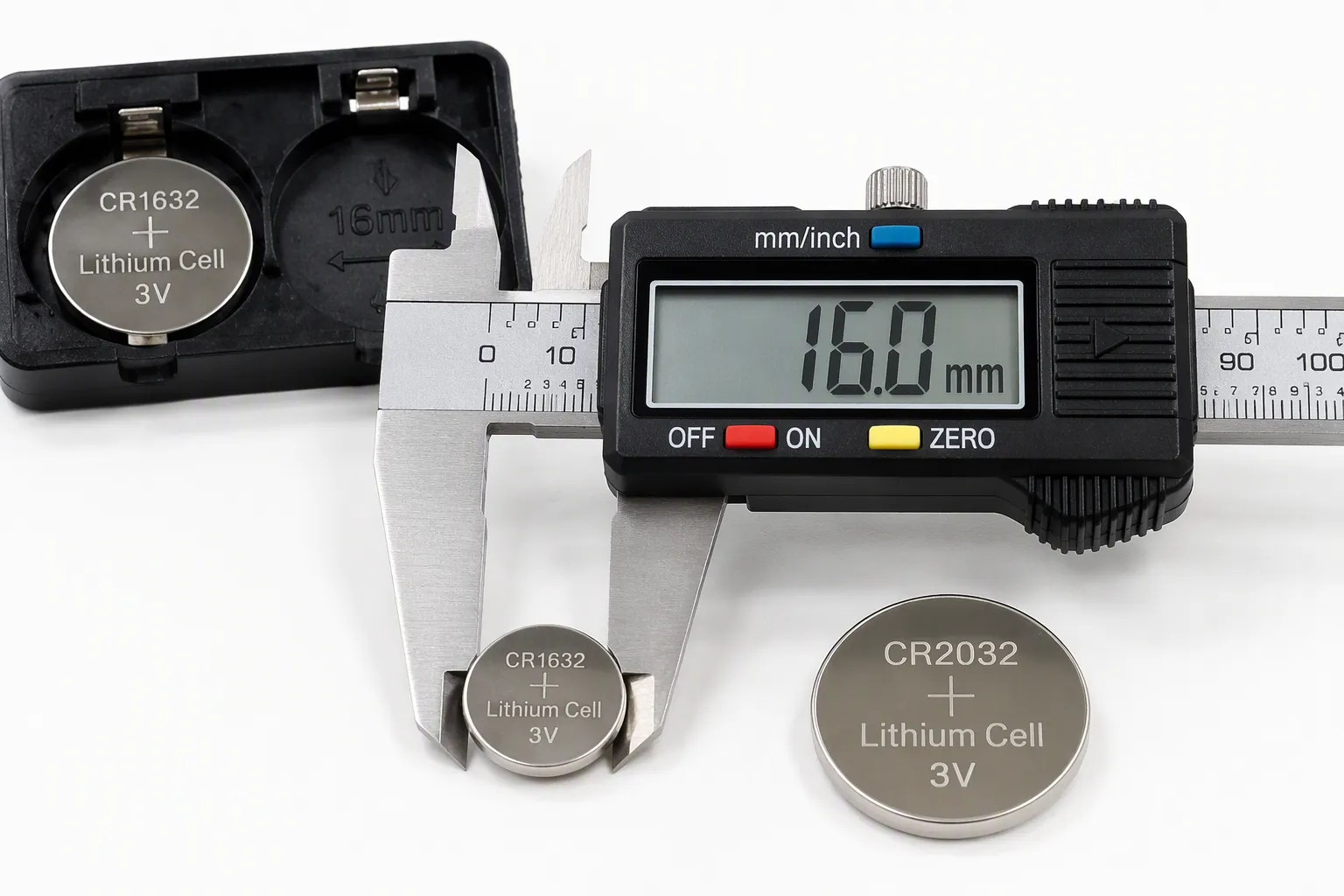
The two cells differ in one key dimension. The CR1632 measures 16 mm across and 3.2 mm thick. The CR2032 measures 20 mm across and 3.2 mm thick. Both share the same 3.2 mm thickness and the same 3V rating. Diameter is the deciding factor for fit.
Battery Model | Diameter (mm) | Thickness (mm) |
|---|---|---|
CR1632 | 16 | 3.2 |
CR2032 | 20 | 3.2 |
You can read these numbers straight off the label. Button cell sizes follow the IEC 60086 code. The letters tell you the chemistry and shape: CR means a 3V lithium round cell. The four digits give the size. The first two digits are the diameter in millimeters. The last two digits are the thickness in tenths of a millimeter. So the "16" in CR1632 means 16 mm wide, and the "32" means 3.2 mm thick. The same rule gives the CR2032 its 20 mm width and 3.2 mm thickness. This naming system makes it easy to confirm a size before you buy.
Why Fit Matters
A 4 mm difference sounds small. It is not small inside a battery compartment. A 20 mm cell cannot seat in a 16 mm holder. The metal shell simply will not drop into the narrower well. A 16 mm cell in a 20 mm bay creates the opposite problem. The cell sits loose. It can slide off center and lose contact with the terminals. A poor connection may stop the device from working. It can also cause intermittent operation or shorten usable battery life.
Picture a caliper reading of 16.0 mm against a holder built for 20 mm. The gap around the cell is wide enough for movement. Now picture the reverse: a 20 mm shell pressed against a 16 mm opening. The cell rests on the rim and never reaches the contacts. Neither case gives you reliable power.
Check two things before you install any coin cell. First, measure or read the holder diameter. Second, confirm the thickness. A CR1632 Battery belongs in a 16 mm compartment. A CR2032 belongs in a 20 mm slot. The table below sums up the match.
Battery | Diameter | Fits 16mm holder | Fits 20mm slot |
|---|---|---|---|
CR1632 | 16.0 mm | Yes | No |
CR2032 | 20 mm | No | Yes |
The lesson is simple. Match the cell to the holder. A correct fit protects the contacts and keeps your device running as designed.
Capacity Comparison
mAh Ratings
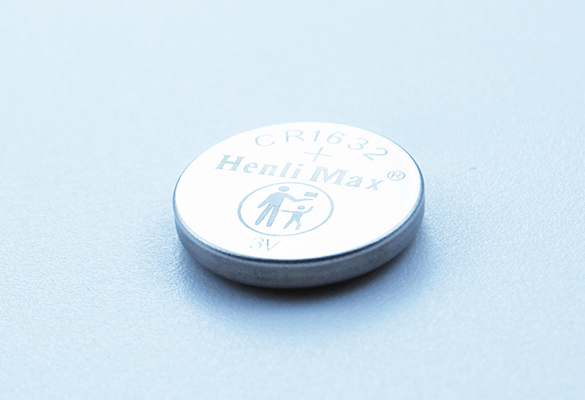
Capacity tells you how much energy a cell stores. Manufacturers rate coin cells in milliampere-hours, or mAh. The CR1632 carries roughly 140 mAh. The CR2032 carries roughly 225 mAh. That gap is not a small trim. The larger cell stores well over half again as much energy as the smaller one.
Battery Model | Approximate Capacity | Nominal Voltage |
|---|---|---|
CR1632 | ~140 mAh | 3V |
CR2032 | ~225 mAh | 3V |
The reason comes back to geometry. Capacity scales with the volume of active material inside the can. A 20 mm shell holds a wider electrode stack than a 16 mm shell of the same 3.2 mm height. The extra 4 mm of diameter gives the CR2032 more room to store chemistry. That extra material translates directly into more usable charge. Under the same load, the CR2032 generally runs longer. This is why a device with space for a 20 mm cell often specifies the CR2032.
Both cells share the same Li/MnO2 chemistry. Lithium manganese dioxide delivers a stable discharge profile. The voltage holds near 3V across most of the discharge curve. It drops off near the end of life. You get steady power for most of the run, then a gradual decline. This flat profile suits devices that need consistent voltage, such as clocks and memory backup circuits. A CR1632 Battery follows the same chemistry and the same stable curve. It simply holds less total charge.
Real-World Battery Life
The mAh rating is a guide, not a guarantee. Actual runtime depends on how hard your device draws current. A low-drain device pulls a tiny current. A high-drain device pulls much more. The same cell lasts far longer in the first case. Think of a watch that sips power versus a key fob that transmits in short bursts. The watch may run for years. The fob may need a swap sooner.
Temperature also shifts the picture. Cold slows the internal chemistry and raises internal resistance. A cell in a freezing car may deliver less usable capacity than the same cell at room temperature. Heat speeds self-discharge over long storage. Both effects change real runtime away from the printed number.
Use the mAh figure to compare cells of the same chemistry. A higher rating points to longer service under similar conditions. Do not treat it as a stopwatch. Your device's drain rate, its duty cycle, and its operating temperature all shape the outcome. A CR2032 in a given device will usually outlast a CR1632 in the same device, because it starts with more stored energy. The exact hours or months depend on the load. Check your device manual for expected battery life, and treat the mAh rating as a relative measure rather than a fixed promise.
CR1632 Battery Applications
Devices That Use CR1632
The CR1632 fits devices built around a 16 mm footprint. You will find it in watches, calculators, and remote controls. Medical devices use it too, along with automotive key fobs. It also serves memory backup and real-time clock functions on circuit boards. A technical electronics reference shows a horizontal PCB-mount CR1632 coin cell holder, and vertical-mount versions exist as well. That design detail tells you the cell belongs on electronic assemblies, not just in consumer gadgets. A coin cell size guide also describes the CR1632 as common in smaller devices and in some fitness trackers.
This cell earns its place through compact size and high energy density. It also offers low self-discharge, so it holds its charge during long idle periods. Store it properly and it keeps power for up to 10 years. Those traits suit devices that sit unused for months and then need a reliable burst of power. A CR1632 Battery works best where space is tight and the current draw stays modest.
Devices That Use CR2032
The CR2032 serves a different category. You will find it in devices with room for a 20 mm cell, and those devices benefit from the higher capacity. Think of a motherboard that needs a backup cell for its clock. Think of a small flashlight or a wireless sensor that draws more current. The extra diameter gives the CR2032 more stored energy, so it runs longer under the same load. Each cell fits its own device category best. Match the holder size and the drain rate, and you get the performance the designer intended.
Swap Compatibility
Why They Are Not Interchangeable
You cannot swap these two cells. The 16 mm diameter of the CR1632 and the 20 mm diameter of the CR2032 rule out a direct exchange. The size difference is fixed by the IEC 60086 code, so no brand or model changes it.
Forcing a larger cell into a smaller bay creates real problems. A 20 mm shell will not drop into a 16 mm well. Press it in and you risk bending the holder, cracking the case, or damaging the contacts. The cell may sit on the rim and never reach the terminals. Your device then gets no power at all.
Using a smaller cell brings its own trouble. A 16 mm cell in a 20 mm bay sits loose. It slides off center and loses contact. The device may cut out at random, reset itself, or fail when you move it. A loose cell can also rattle against nearby components. Neither direction gives you a safe, reliable fit.
What to Do Instead
Check the device label or manual first. The specified size is printed there, and that number is the one to buy. Follow these steps to confirm the right cell:
Read the battery compartment label and note the exact model code.
Check the manual for the recommended size and voltage.
Measure the holder diameter if the label is missing or worn.
Match the code to the cell you plan to buy before checkout.
Ask the seller for documentation when you buy. Request datasheets and pulse curves, review capacity versus temperature, confirm storage shelf life and self-discharge, and verify shipping and regulatory compliance before finalizing battery size. A CR1632 Battery belongs only in a device built for a 16 mm cell. Buy the size your device specifies, and you protect both the contacts and the electronics.
Safety and Equivalents
Safe Handling and Storage
Treat every coin cell as a small but serious item. Keep cells away from children, and store them in a container a child cannot open. A swallowed button cell needs medical help right away. Call 800-498-8666 for guidance if a child swallows one. Never recharge these cells. A recharge attempt can cause leakage, rupture, or fire. Dispose of used cells properly at a battery recycling point.
Both cells share the same storage window. Keep them between -30°C and +60°C, and expect up to 10 years of shelf life from low self-discharge. Store them dry and away from direct heat. A CR1632 Battery is leak-resistant and contains no mercury, cadmium, or lead. The CR2032 carries the same mercury-free, leak-resistant design. Choose devices with child-resistant compartments. A compartment that needs a screwdriver, a coin, or two simultaneous actions adds a real layer of protection.
Equivalent Part Numbers
Part numbers cross-reference across brands. The CR1632 also sells as DL1632 and ECR1632. The CR2032 appears as DL2032, ECR2032, and BR2032, among others. Duracell labels it DL2032, Energizer uses ECR2032, and Panasonic lists both CR2032 and BR2032. Kodak sells KCR2032, and industrial buyers may see codes like 5004LC.
Match size and voltage, not brand name. A cell labeled DL1632 is still a 16 mm, 3V lithium coin cell. Check the diameter, the thickness, and the 3V rating on the package. That habit keeps you from buying the wrong cell under a different label.
The CR1632 is the compact, lower-capacity choice. The CR2032 is the larger, longer-lasting option. Both are 3V lithium coin cells, and each one fits its own device category well.
Your device decides which cell you need. Check the label or the manual before you buy. The specified size is the one the holder and the contacts were built for. A CR1632 Battery belongs in a 16 mm compartment, and a CR2032 belongs in a 20 mm slot. Match the code on the package to the code on the device, and you get reliable power without fit problems. Either cell serves its own devices well when you choose the right one.
FAQ
Can I use a CR2032 in place of a CR1632?
No. The CR2032 measures 20 mm across, and the CR1632 measures 16 mm. A 20 mm cell will not seat in a 16 mm holder. Pressing it in can bend the contacts or crack the case. Buy the size your device label specifies.
Does a higher mAh rating always mean longer battery life?
Not always. The CR2032 stores roughly 225 mAh against roughly 140 mAh for the CR1632, so it usually runs longer under the same load. Your device's drain rate and operating temperature still shape real runtime. Treat the rating as a relative guide.
How long can I store a CR1632 before it loses charge?
Store it properly and it keeps power for up to 10 years. Low self-discharge makes that possible. Keep cells between -30°C and +60°C, away from direct heat and moisture. A dry, cool drawer protects the charge best.
Are DL1632 and ECR1632 the same as a CR1632?
Yes. Those codes cross-reference the same cell. DL1632 and ECR1632 both describe a 16 mm, 3V lithium coin cell. Match the diameter, the thickness, and the 3V rating on the package. The brand name does not change the size.
What should I do if a child swallows a coin cell?
Get medical help right away. Call 800-498-8666 for guidance. Keep cells in a container a child cannot open, and choose devices with child-resistant compartments. A compartment that needs a screwdriver or a coin adds real protection.