



What is a CR2032 battery used for
A CR2032 battery powers many small electronics you use every day. Watches, key fobs, motherboards, medical devices, toys, and IoT sensors all rely on this compact power source. This 3V lithium coin cell earns its place through a small footprint, steady voltage, and a long shelf life. The global CR2032 coin cell battery segment is projected to reach $1.575 billion by 2026, growing at a 5.8% CAGR. That growth shows how deeply these cells sit inside modern devices. You will learn which devices use this battery and why it suits each one so well.
Key Takeaways
The CR2032 battery powers many small devices you use every day.
It keeps your computer's clock and settings alive when the power goes out.
Medical devices and smart sensors rely on it for quick, steady power bursts.
Its small size, stable voltage, and long shelf life make it a dependable choice.
You can easily replace a dying CR2032 battery to keep your gadgets running.
Everyday Devices Powered by CR2032 Battery
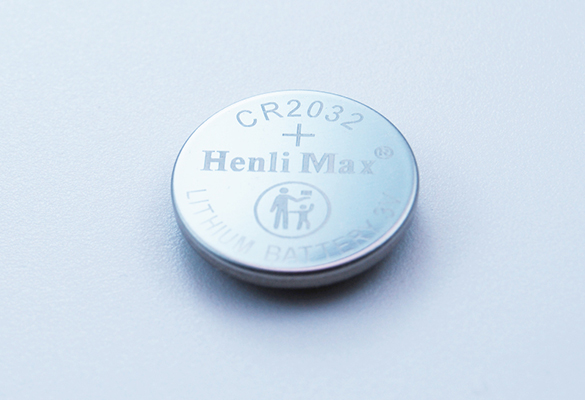
You probably own several gadgets that depend on this small coin cell. Manufacturer compatibility lists show a wide range of everyday items that use it. These include:
Watches
Pocket calculators
TV and garage door remotes
Car key fobs
Fitness trackers
Laser pens
Hearing aids
Electronic scales
Small LED lights
Keychain games
These devices share one trait. They draw very little power most of the time. Some also fire in short pulses. A remote control sends a quick infrared burst when you press a button. A fitness tracker logs a step count every few seconds. A hearing aid amplifies sound in real time. Each device needs a steady 3V output to work right. The CR2032 battery delivers that stable voltage. Its lithium manganese dioxide chemistry holds voltage steady even as the cell drains. That keeps your watch ticking and your calculator accurate.
Watches, Calculators, and Remotes
A quartz watch runs on a tiny pulse every second. That pulse needs a reliable voltage source. The CR2032 fits inside most watch cases without adding bulk. Pocket calculators use the same cell for similar reasons. You press keys in bursts, and the calculator needs instant power each time. Remote controls for TVs and garage doors also rely on this battery. They sit idle for months, then fire a signal when you press a button. The cell must hold its charge during long idle periods. It must also deliver a quick burst on demand. The CR2032 handles both jobs well.
Key Fobs and Fitness Trackers
Car key fobs are a classic example. An official Honda remote engine starter manual lists CR2032 as the required battery for that accessory transmitter. This shows that key fob battery sizes vary by model. You must confirm the correct size in your specific manual. According to a Cadillac dealership blog, the majority of current Cadillac key fobs use a CR2032 lithium coin cell. A small number of models instead require a CR2450. Fitness trackers also use this cell. They monitor your heart rate and count steps throughout the day. These devices draw power in short pulses. The CR2032 maintains stable voltage during those bursts. That keeps your tracker logging data without glitches. Hearing aids and laser pens follow the same pattern. They need compact power that lasts. The CR2032 delivers it.
Computers and Motherboards
CMOS and BIOS Backup
Your desktop computer relies on a CR2032 battery to keep its basic settings alive. This coin cell powers the CMOS chip on the motherboard. The CMOS chip stores your BIOS configuration and tracks the system time. When you unplug your computer, the battery preserves those settings. Without it, your system would forget its hardware configuration every time you power down.
A healthy CMOS battery can last 5 years or more. The exact lifespan depends on usage and temperature. Here is a breakdown of typical durations:
Condition | Typical Lifespan |
|---|---|
Typical CMOS battery | 3–7 years |
Actively powering motherboard | Around 2–3 years |
Low-drain motherboard use | 5–7 years |
High heat (122°F+) | 3–5 years |
When the battery runs low, you will see clear warning signs. Your BIOS may display messages like "CMOS Checksum Error" or "CMOS Battery Failure." You might also see "Press F1 to continue" on a cold boot. Your system clock may reset to 2000 or 2001. These symptoms all point to one cause: a dying backup battery.
Real-Time Clock Modules
Real-time clock modules depend on this same coin cell for backup power. The ZS-042 RTC module, built around the DS3231 chip, specifies a CR2032 battery as its backup source. You insert the cell into the holder to enable timekeeping during power loss. If the backup fails, you simply replace the battery and check the polarity.
Some RTC chips deliver impressive efficiency. The PCF8525 can run on a CR2032 coin cell for over 10 years. Other RTCs last only about 1 month under the same conditions. This difference matters for devices that need accurate timekeeping across long power outages. A stable backup battery keeps your clock module running without interruption.
Medical, Security, and Smart Devices
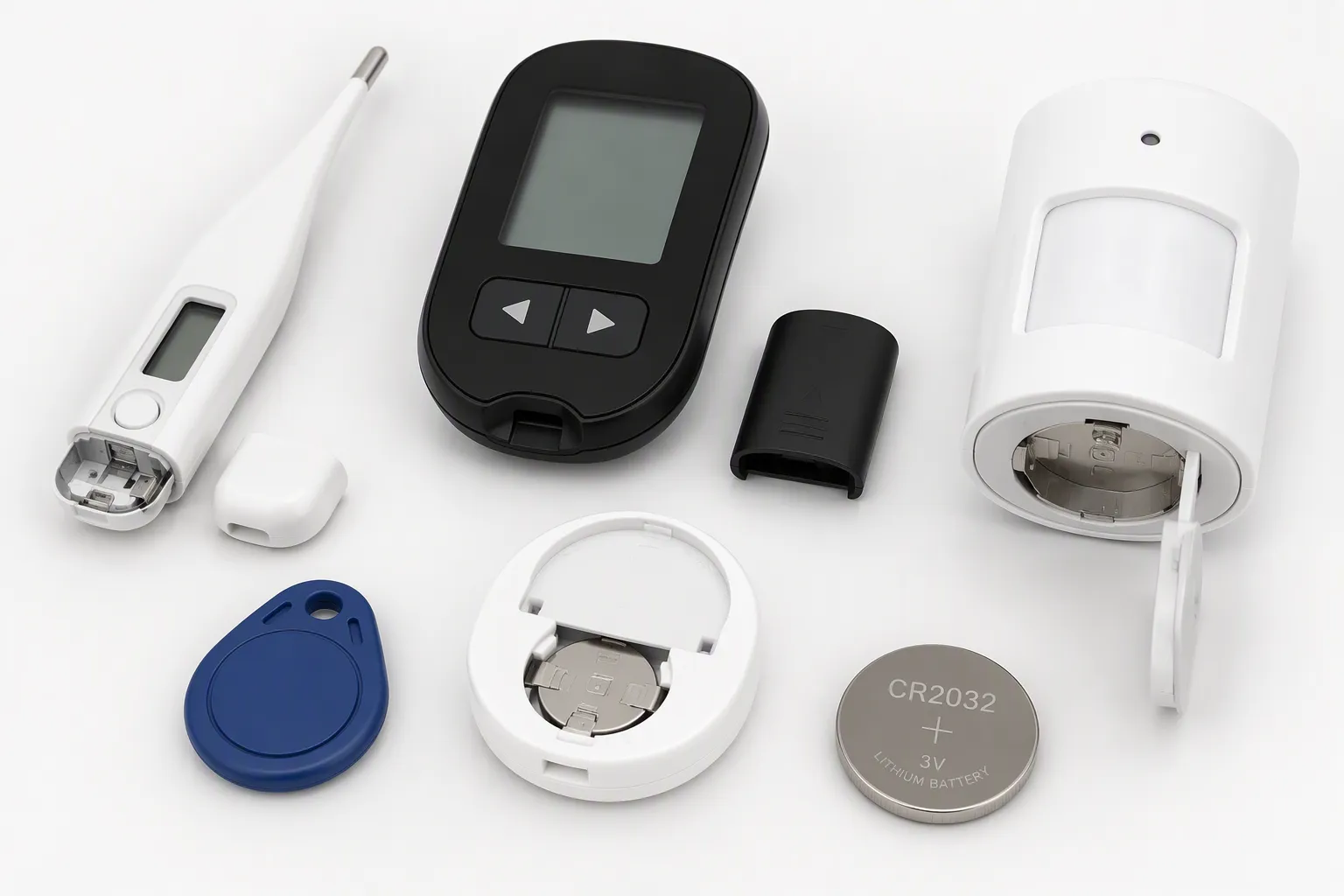
Medical and Safety Devices
Medical and safety devices demand power you can trust. A digital thermometer needs a quick burst of energy to take a reading. A glucose monitor fires short pulses each time you test your blood. Home security sensors sit idle for months, then trigger an alert the moment a door opens. RFID tags and smart sensors follow the same pattern. They sleep most of the time and wake up for brief moments of activity.
These devices share a common need. They require a stable 3V output during short bursts. The CR2032 battery meets that need with its lithium manganese dioxide chemistry. This chemistry holds voltage steady even when the cell drains over time. That stability keeps your thermometer accurate and your glucose monitor reliable. A home security sensor must respond instantly when triggered. A weak battery could delay that response. The CR2032 delivers the pulse power these devices need.
IoT Sensors and Bluetooth Beacons
IoT sensors and Bluetooth beacons represent a growing category of CR2032 applications. These devices sleep most of the time and wake up to sense or transmit data. Battery life varies widely based on how often the device wakes up. An IoT temperature sensor or smart sensor can last from several months to a few years. A general wireless sensor typically runs 6 months to 5 years. More frequent sensing or wireless transmission shortens battery life.
Bluetooth beacons present a unique challenge. Transmit peaks can collapse the cell voltage below the brownout threshold. That collapse triggers a system reset. The average-current formula may show enough capacity, but the cell must also handle peak pulse current. You must check both values against the cell datasheet.
Attribute | CR2032 | BR2032 |
|---|---|---|
Chemistry | Lithium manganese dioxide (Li/MnO₂) | Lithium carbon monofluoride (Li/CFₙ) |
Nominal Voltage | ~3.0 V | ~2.8 V |
Pulse Capability | Strong | Weak |
Self-Discharge | Moderate | Ultra-low |
Temperature Tolerance | Standard | Wider |
Suitability for BLE Beacons | Yes (low-pulse) | Only if circuit accepts 2.8 V and draws <0.1 mA steady current |
Replacing a CR2032 with a BR2032 is only viable if the circuit accepts a 2.8 V nominal voltage and draws very low, steady current (below 0.1 mA). The BR2032 cannot sustain the pulse loads that the CR2032 handles — swapping without redesign risks communication failures or brownouts in Bluetooth beacon applications.
CR2032 coin cells work well in low-pulse applications such as BLE beacons and simple sensors. Pulse current exceeding 15 to 20 mA causes the cell voltage to collapse. Apply a derating factor of 0.85 when you calculate usable capacity. Usable capacity is approximately 220 mAh at 3.0 V nominal, with self-discharge of 1–3% per year. For a BLE beacon drawing 0.02 mA average current, expected life is about 13 months. That lifespan suits disposable consumer products but not industrial deployments.
Why the CR2032 Battery Works Well
The CR2032 battery earns its place in these devices because of a few key traits. Its chemistry, size, and discharge behavior match the needs of low-power electronics.
Compact Size and Low Self-Discharge
You can read the dimensions right from the name. The first two digits give a diameter of 20 mm. The last two digits give a thickness of 3.2 mm. A standard CR2032 weighs about 3.0 g. That small, flat shape fits into slim product designs. It also fits common CR2032 holders, so you can install or swap it in seconds.
The lithium manganese dioxide chemistry keeps the cell from losing energy while idle. The annual self-discharge rate is about 1% per year. Stored at 20°C, the battery retains over 99% of its charge after one year. Even after a decade of storage, it keeps most of its energy. That is why a remote control can sit in a drawer for years and still work.
Long Shelf Life and Stable Voltage
This chemistry also delivers high energy density. Reported values for Li-MnO2 cells range from 230 to 400 Wh/kg. The CR2032 battery does not recharge. It serves long-term use in low-drain or moderate-drain devices. You get years of service from a single cell.
Voltage stays steady during short bursts. In pulse tests, a CR2032 under a 400 Ω pulse load with a 15 kΩ background drain maintained about 2.7–2.8 V during load. It recovered well between pulses. The larger electrode surface reduces voltage sag under pulsed loads. This makes the cell reliable for devices that fire in brief pulses.
Because coin-cell construction uses high internal resistance, drawing high current from a CR2032 causes immediate voltage sag. Use these cells for low steady drains or short pulses. As a cell ages, internal resistance rises and pulse-voltage drop increases.
So you should match the battery to the device. For low-power pulse loads, the CR2032 gives stable 3V output. For continuous high-current discharge, it is the wrong choice. Knowing this helps you select the right replacement.
You now know the main device categories that rely on this coin cell. Everyday electronics, computers and motherboards, medical and security devices, and smart IoT sensors all depend on it. The CR2032 battery earns its place through compact size, stable 3V output, low self-discharge, and long shelf life. These traits make it a dependable power source for low-drain and pulse-driven applications. This knowledge helps you spot a dying cell in your own devices. You can then identify the correct replacement and swap it with confidence. A fresh cell keeps your gadgets running smoothly for years.
FAQ
Here are answers to common questions about the CR2032 battery.
How long does a CR2032 battery last?
A CR2032 battery can last several years. The lifespan depends on the device's power draw. A CMOS backup battery often lasts 3 to 7 years. Low-drain devices like remote controls can work much longer. The cell's self-discharge rate is about 1% per year.
Can I replace a CR2032 with a BR2032?
Only under strict conditions. The CR2032 battery handles pulse loads; the BR2032 does not. The BR2032 has a 2.8V nominal voltage and weak pulse capability. Swap it only if your circuit accepts 2.8V and draws steady current below 0.1 mA. Otherwise, you risk brownouts.
How do I know my motherboard's CR2032 battery is failing?
You may see a CMOS Checksum Error or CMOS Battery Failure message. Your system clock may reset to an earlier date. You might need to press F1 to continue at boot. These signs mean the CR2032 battery powering the motherboard is dying.
What devices use a CR2032 battery?
Watches, calculators, remotes, key fobs, fitness trackers, hearing aids, and thermometers use it. Motherboards and IoT sensors also rely on it. These devices need stable 3V output for low drain or short pulses.