Top factors to consider when sourcing CR2025 battery from china
Sourcing a CR2025 battery from China works well when you check six factors before you place an order. Those factors are technical specs, application fit, compliance, cost, supplier vetting, and quality assurance. Skip any one of them and a low price can hide a real risk.
This article gives you a practical checklist. Procurement managers and sourcing teams can work through it step by step. Each factor comes with clear questions to ask and simple checks to run. Use the list to compare suppliers on equal terms. Then you can judge every quotation on facts, not on price alone.
Key Takeaways
Check the battery's technical specifications first. Ask for details like capacity, voltage, and discharge curve to ensure the battery meets your device's needs.
Make sure the battery fits your device. Confirm the size and temperature tolerance before you order.
Request compliance certificates such as CE, RoHS, UN38.3, and MSDS. Verify they match the exact model and factory.
Calculate the total landed cost, including shipping and duties. Compare suppliers based on the full cost, not just the unit price.
Test samples from potential suppliers and inspect incoming shipments. Check voltage, dimensions, and labeling to ensure quality.
Technical Specs Of A CR2025 Battery
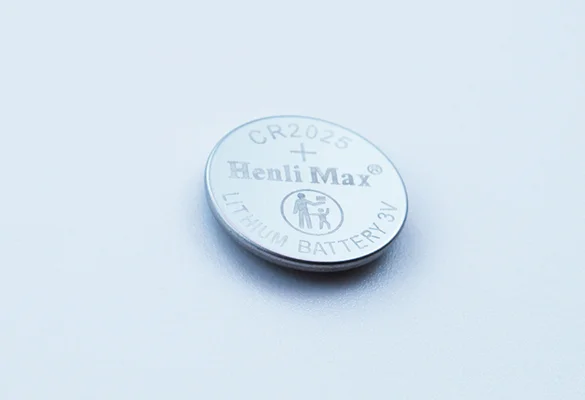
Specs come first. You cannot judge a quotation until you know what the cell inside the wrapper actually delivers. A CR2025 battery is a primary lithium manganese dioxide (Li/MnO2) button cell. It does not recharge. Treat every spec below as a question to put to your supplier.
Capacity, Voltage, And Discharge
Start with the numbers that define the cell. The table below collects the core parameters for the CR2025 chemistry, drawn from flywing-tech's published comparison data.
Parameter | Specification |
|---|---|
Nominal Voltage | 3.0 V |
Open-Circuit Voltage (new) | 3.6–3.7 V |
Cut-off Voltage | ~2.0 V |
Operating Temperature | −30 °C to +60 °C |
Self-Discharge Rate | < 1 % per year |
Rechargeable | No (primary cell) |
Typical Capacity | 170 mAh (to 2.0 V at 15 kΩ, 21 °C) |
Capacity sits in the 150–170 mAh range for most quality cells. The Henlimax CR2025, part of the CR Series, rates at approximately 150 mAh with a nominal 3 volts. That figure holds under a defined load and temperature, so always ask which test conditions produced the number on the datasheet. Compare datasheets side by side. A supplier who cannot state the load, temperature, and cut-off voltage behind a capacity figure has not tested the cell properly.
Discharge behavior matters as much as the headline capacity. Unikeyic describes this chemistry as having a slightly sloped or gradually decreasing discharge curve. The voltage holds high early, then declines as capacity depletes. Flywing-tech's datasheet data shows the cell staying above 2.9 V for around 800 hours at 21 °C and 15 kΩ, with total runtime near 890 hours to the 2.0 V cut-off. That flat-then-falling profile suits devices that draw short current pulses, such as remote controls and small toys. Under pulse tests at 21 °C, flywing-tech records a pulse current of about 6.8 mA at 2.7 V, with the voltage dipping slightly below 2.6 V and then recovering near 3.0 V. Internal resistance climbs faster after 100 mAh, so plan replacement intervals around that point for high-drain designs. Ask for the discharge curve, not just the capacity number. The curve shows where the voltage falls in your device's operating window.
Shelf Life And Self-Discharge
Self-discharge decides how long a cell survives in your warehouse. Buttonbatterylithium puts the rate at roughly 1% per year at 20 °C. A slow drain compounds over years, so a cell that leaves the factory full may arrive at your customer noticeably weaker. For low-draw devices like watches and key fobs, this loss is the main threat to performance before the first use.
Shelf life follows directly from that rate. Buttonbatterylithium reports 8–10 years for quality brands. The same source grades the market: premium brands reach about 8–10 years, quality mid-tier brands about 5–8 years, and budget or generic cells about 2–5 years with more variability. Henlimax rates its CR2025 at up to 10 years.
Ask your supplier for the production date code on every carton. A long shelf life means little if the stock you receive is already two years old. Store cells cool and dry, and rotate stock first-in, first-out. These two habits protect the shelf life you paid for. Run a simple check on incoming stock. Measure open-circuit voltage on a sample. A new cell should read 3.6–3.7 V per flywing-tech. A reading well below that suggests age or storage problems.
Application Fit And Compatibility
Device Fit And Dimensions
A CR2025 battery measures 20mm across and 2.5mm thick. That thickness is the number that decides whether a cell drops into your device. Do not treat the CR family as interchangeable. A CR2016 is thinner, and a CR2032 stands 3.2mm tall. Bettlink's comparison guide lists these sizes side by side, and it also shows the capacity gap. The CR2032 carries 235 mAh typical (210–240 mAh), while the CR2025 delivers 170 mAh (around 150–170 mAh). That extra capacity in the CR2032 comes with a taller body, so a slim battery compartment simply will not accept it.
Battery | Dimensions | Capacity |
|---|---|---|
CR2032 | 20mm x 3.2mm | 235 mAh (typical 210–240 mAh) |
CR2025 | 20mm x 2.5mm | 170 mAh (around 150–170 mAh) |
CR2016 | thinner | 80–100 mAh |
For car key fobs, fit usually comes first and runtime second. Slim remotes send short signals, so the cell spends most of its life idle. A 2.5mm cell that seats correctly beats a larger cell that bulges the case. Check the compartment depth on your device drawing before you approve any sample.
Temperature Tolerance
Heat and cold change what a button cell can deliver. A device left on a dashboard or stored in a cold warehouse pushes the chemistry outside its comfort zone. Ask your supplier for the operating temperature range on the datasheet, then match it to the real conditions your product will face. Do not assume the standard cell covers every climate.
Henlimax offers LT Series low-temperature variants for extreme environments. The company also provides deep processing options such as solder tabs and wire leads for specialized builds. These options suit designs that need a fixed connection instead of a friction-fit holder. Request samples of the exact variant you plan to buy, and test them under your own temperature profile before you commit to volume.
Compliance And Certifications
Required Certificates
Compliance paperwork protects you at customs and in the field. Ask every supplier for four documents before you sign a purchase order. Each one answers a different question.
CE shows the cell meets European market requirements.
RoHS confirms the battery stays within restricted substance limits.
UN38.3 proves the cell passed the transport safety tests for lithium batteries.
MSDS gives your team the handling, storage, and emergency information.
Request the full documents, not just a logo on a sales page. A certificate number you can look up carries more weight than a scanned image. Check that each certificate names the CR2025 model and the factory that will produce your order. A certificate issued for a different cell size tells you nothing about the product you plan to buy.
Documentation Checks
Paperwork only helps when it matches the goods in the box. Build a simple verification step into your receiving process. Compare the model number on the certificate with the model number on the carton label. Compare the manufacturer name on the MSDS with the supplier you paid. Any mismatch deserves a written explanation before you accept the shipment.
Labeling deserves the same attention. Check the production date code, the polarity marking, and the model designation on each cell and each carton. Photograph the labels on arrival and file the images with the certificate copies. This record settles disputes quickly and supports any audit later.
Ask your supplier to send the document package with the quotation, not after the order. A supplier who produces clean, matching paperwork early usually runs a disciplined operation. Treat missing or inconsistent documents as a warning sign. Resolve it before you commit to volume, because fixing a compliance gap after the container ships costs far more than a short delay now.
Cost And Total Landed Cost
Unit Price And MOQ
Set your requirements before you open any quotation. Write down the shelf life you need, the performance standard you will test against, and your target price per cell. Use the earlier sections as your source. A supplier who quotes a cell with a 5-year shelf life is not offering the same product as one who quotes up to 10 years. Compare like with like, or the cheapest quote will win for the wrong reason.
Collect quotations from at least three suppliers. Ask each one for the same information in the same format. Unit price alone tells you little. Request the minimum order quantity (MOQ), the payment terms, and the production lead time alongside the price. A low unit price paired with a large MOQ ties up your cash in stock you may not need for months. Match the MOQ to your real annual demand, then judge the price against that volume.
Shipping And Duties
Build the full landed cost before you compare suppliers. Start with the unit price and multiply by your order quantity. Add freight, insurance, and any duties your country applies to the import. Include bank charges for the payment method and any inspection or testing fees you plan to pay. The total is the number that matters, not the quote on the first line.
Watch for hidden costs. Lithium cells carry transport rules under UN38.3, so confirm who pays for the test documentation and any special packing. Check whether the supplier quotes FOB, CIF, or another term, because each term moves different costs to you. Ask about tooling or setup charges for solder tabs and wire leads. Add a line for scrap and rework from any cells that fail your incoming inspection. A supplier with a slightly higher unit price can still deliver the lower landed cost once you count every line.
Evaluating CR2025 Battery Suppliers
Experience And Capacity
A supplier's track record tells you how they will handle your order when problems appear. Ask how long the company has produced button cells and how many units it ships each month. A factory with steady output can absorb a rush order. A trading company with no plant behind it may struggle when demand spikes. Request a factory audit report or a video tour of the production line. Look for automated assembly, clean rooms, and in-house testing equipment. These signs show real manufacturing depth.
Judge five criteria side by side before you shortlist anyone. Production capacity shows whether the supplier can meet your annual volume without delays. Product quality and certifications prove the cells meet the standards covered earlier in this guide. Export experience matters because lithium cells carry transport rules, and a supplier who ships regularly knows the paperwork. Pricing competitiveness keeps your landed cost in check. OEM customization capability covers options like solder tabs, wire leads, and private labeling. Henlimax, for example, offers deep processing options and LT Series variants for specialized builds. Score each supplier on all five points. A company that wins on price but fails on capacity will cost you more in the end.
Samples And Communication
Never commit to a bulk order before you test samples. Request cells from your top two or three suppliers and run them through your own devices. Check the open-circuit voltage, confirm the dimensions fit your battery compartment, and measure runtime under your real load. Compare the production date codes on the samples. A fresh cell with a long shelf life protects your inventory. Test the exact variant you plan to buy, whether that is the standard cell or a tabbed version.
Communication quality predicts order quality. Send a technical question and time the reply. Ask about test conditions, certificate numbers, or lead times. A responsive supplier answers with specifics. A slow or vague reply now often becomes a slow or vague reply during production. Pay attention to how the supplier handles your sample request. Clear tracking numbers, proper packaging, and accurate documentation all signal a disciplined operation. Use these early exchanges as a preview of the partnership. A supplier who communicates well before the sale usually delivers well after it. Combine sample testing with a communication check, and you gain a clear picture of the CR2025 battery supplier you can trust for repeat orders.
Quality Assurance And Inspection
Incoming Inspection
Inspection starts the moment the shipment arrives. Set a sampling plan before the first carton lands. Pull cells from several cartons, not just the top layer. Test each sample against the specs you approved earlier.
Run five checks on every incoming lot:
Voltage: measure open-circuit voltage. A fresh cell should read 3.6–3.7 V.
Capacity: discharge a sample under your stated load and confirm it lands near the rated figure, around 150 mAh for the Henlimax CR2025.
Dimensions: verify the 20mm diameter and 2.5mm thickness with calipers. A cell that misses these numbers will not seat in your device.
Labeling: confirm the model, polarity marking, and production date code on each cell and carton.
Packaging: check for crushed cartons, broken seals, and moisture damage.
Record every result on a simple form. File the form with the certificate copies you collected during supplier vetting. A failed check earns a written response from the supplier before you release the lot to production.
Third-Party Testing
Your own bench tests catch obvious defects. They cannot confirm chemistry, transport safety, or long-term performance. Send samples to an accredited lab for independent testing. Ask the lab to verify capacity, voltage, and the UN38.3 transport requirements. Repeat this testing on a fixed schedule, such as once per year or whenever the supplier changes a material or a production line.
Pair lab testing with periodic supplier audits. Visit the plant or hire an auditor to review the production line, the test records, and the storage conditions. Audits catch drift that a single sample cannot show. Keep every report on file. Together, incoming checks, lab results, and audits give you a full picture of the CR2025 battery you sell and the supplier behind it.
Six factors decide whether your CR2025 battery order succeeds: technical specs, application fit, compliance, cost, supplier vetting, and quality assurance. Each one protects a different part of your purchase. Balance them together. A quote that wins on price but fails on specs or paperwork will cost you more later.
Work through the checklist step by step. Request samples first, test them in your own devices, and confirm the certificates match the goods. Scale your order only after the samples and documents pass. That sequence turns a risky purchase into a routine one.
FAQ
Is a CR2025 the same as a CR2032?
No. Both measure 20mm across, but the CR2025 stands 2.5mm tall and the CR2032 stands 3.2mm tall. The CR2032 also offers more capacity. Check your battery compartment depth before you swap one for the other.
How long can I store CR2025 batteries before they lose power?
Quality cells hold a shelf life of up to 10 years, and self-discharge runs under 1% per year. Storage conditions still matter. Keep cartons cool and dry, rotate stock first-in, first-out, and check the production date code on arrival.
Which certificates should I request from a Chinese supplier?
Ask for four documents: CE, RoHS, UN38.3, and MSDS. Confirm each certificate names the CR2025 model and the factory that will produce your order. Request the package with the quotation, not after you place it.
Can I get a CR2025 with solder tabs or wire leads?
Yes. Henlimax offers deep processing options such as solder tabs and wire leads for specialized builds. The company also provides LT Series low-temperature variants for extreme environments. Request samples of the exact variant and test them in your own build first.
How do I check a CR2025 battery when it arrives?
Measure open-circuit voltage on a sample. A fresh cell should read 3.6–3.7 V. Then verify the 20mm diameter and 2.5mm thickness with calipers, confirm the labeling and date code, and inspect the packaging for damage.