



What makes CR2430 battery ideal for small electronic devices
You probably have a key fob, a small remote, or a watch that hasn't needed a battery change in years. That's often thanks to the CR2430 battery, which pairs a 3V output with a compact 24.5mm x 3.0mm footprint and a long shelf life. The same cell also powers car keys, smart locks, portable sensors, medical devices, and electronic scales. This post walks through its specifications, its performance in low-power devices, and practical tips for storage and use.
Key Takeaways
The CR2430’s slim 24.5mm diameter and 3mm thickness fit perfectly into thin devices like key fobs and watches.
Its stable 3V output keeps low-power electronics running consistently without sudden voltage drops.
A shelf life of up to 10 years means spare batteries stay ready for use without losing charge.
Use the CR2430 for low-drain devices only; avoid replacing thicker batteries like the CR2450.
CR2430 battery size and electrical specs
Standard voltage and capacity
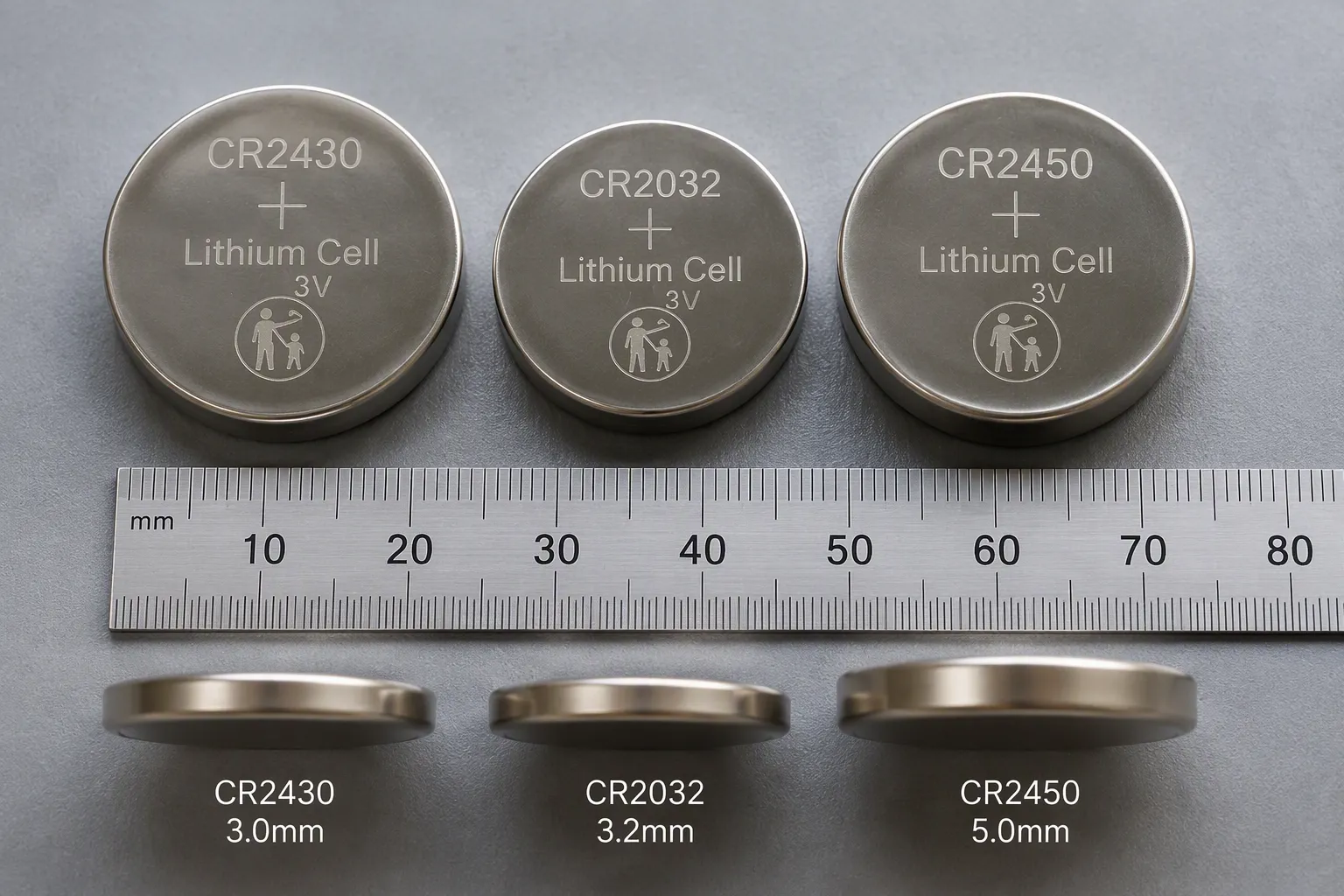
The CR2430 battery measures 24.5 mm across and just 3.0 mm thick. That slim profile keeps it lightweight and easy to fit into thin devices. You will find it inside watches, key fobs, sensors, and other compact electronics that need a reliable power source without adding bulk.
This cell delivers a nominal voltage of 3.0 V. All CR-series coin cells share this same 3 V standard, including common models like the CR2032 and CR2025. The chemistry behind this steady output is lithium manganese dioxide, often written as Li-MnO₂. This chemistry gives you a flat discharge curve. The voltage stays near 3.0 V for most of the battery's life. It does not drop suddenly until the cell is nearly empty. Devices that need consistent power, such as medical monitors or precision instruments, benefit from this stable behavior.
Capacity ranges from about 270 to 300 mAh depending on the manufacturer. One referenced datasheet rates the CR2430 at approximately 300 mAh with a standard discharge current of 0.2 mA. That capacity is enough for low-drain electronics that sip power slowly over months or years.
Battery Model | Chemistry | Voltage | Diameter | Thickness | Capacity |
|---|---|---|---|---|---|
CR2430 | Li-MnO₂ | 3 V | 24.5 mm | 3.0 mm | ~270–300 mAh |
The compact size fits into thin gadgets. At the same time, the cell still offers enough energy for low-power applications. You get a balance between physical footprint and usable capacity.
Comparison with CR2032 and CR2450
Buyers often ask how the CR2430 differs from other coin cells. The table below shows the key differences.
Battery Model | Diameter (mm) | Height (mm) | Voltage | Capacity Range |
|---|---|---|---|---|
CR2430 | 24.5 | 3.0 | 3.0 V | ~290–300 mAh |
The CR2032 is smaller in diameter at 20 mm and thinner at 3.2 mm, but it holds less capacity. The CR2450 is wider at 24.5 mm and thicker at 5.4 mm, offering more capacity. The CR2430 sits between them. It provides more room for energy than the CR2032 while staying thinner than the CR2450.
Price also varies by model and order quantity. The chart below shows how unit prices change as bulk quantity increases.
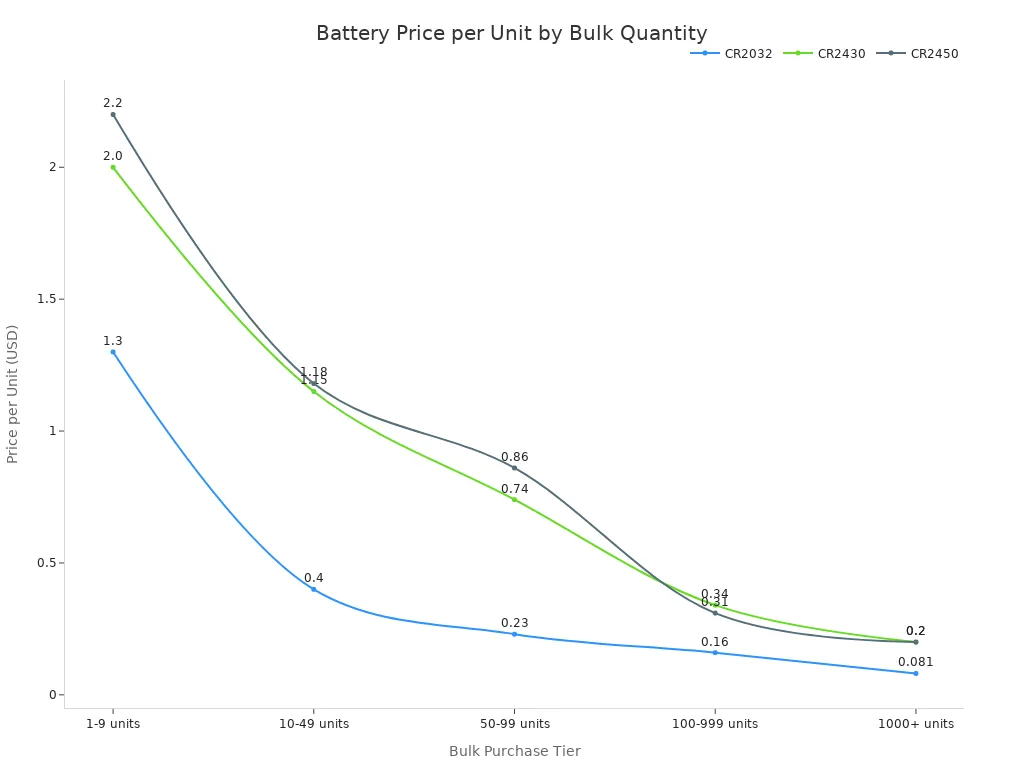
At 1000+ units, the CR2430 and CR2450 both cost $0.20 per unit. The CR2032 costs $0.081 at the same tier. At 100–999 units, the CR2430 runs $0.34 while the CR2032 sits at $0.16. These price gaps matter when you order in volume. The CR2430 costs more than the CR2032 at every tier. However, it delivers higher capacity in a still-compact package. For devices that need that extra energy without a thicker cell, the CR2430 makes sense.
Performance in small electronics
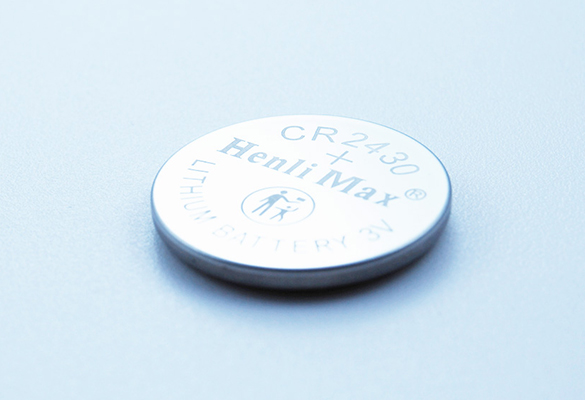
Low-power devices depend on battery behavior more than raw capacity. The CR2430 battery serves these low-drain loads with steady energy. It does not surge. It does not weaken suddenly. It simply delivers a reliable current over many months.
Stable discharge for low-power use
Most small electronics draw only tiny amounts of current. A remote control wakes for half a second to send a signal. A smart lock checks a code a few times per day. A fitness tracker reads sensors all day long. Each action needs a quick, steady burst of voltage. The CR2430 answers without hesitation.
The battery holds a flat discharge curve. Voltage stays near 3.0 V for most of its usable life. Many older battery chemistries lose voltage slowly over time. This one holds the line. For a glucometer, stable voltage means accurate readings. For a heart rate monitor, it means no gaps in the data. Small drops in voltage would change results. Tiny devices do not have room for error.
This cell also has a low self-discharge rate. At rest, it loses very little charge each year. You can install the battery in a device and close the compartment. Months later, that device still shows the same battery level. This trait suits devices that wait between uses. A spare sensor in a toolbox stays ready. A backup thermometer in a first-aid kit still works.
Medical devices, fitness trackers, and outdoor electronic tags depend on this stable behavior. These products often sit unused for long stretches. They must wake up and perform on the first try. A portable thermometer may stay in a cabinet for a season. An outdoor tag may face changes in humidity and temperature. The battery keeps producing the same steady 3 V.
Extended shelf life and reliability
A second strength is the long shelf life. The CR2430 battery can rest for years and still power a device. That long life comes from lithium manganese dioxide chemistry. This chemistry slows down the internal reaction when unused. Other batteries empty themselves over time. This one keeps nearly all of its energy ready.
The long shelf life changes how you manage maintenance. A key fob can sit in a drawer for years. A calculator can stay in a backpack through the winter. A child's toy can wait for the next play session. In each case, the battery remains ready. You only replace it when the device eventually stops working. You do not mark a date on the calendar.
Watches, calculators, key fobs, medical devices, wearables, and toys all share this pattern. They do not run continuously. They wake for a moment, do their job, then return to rest. This cell fits that rhythm perfectly. Ask any manufacturer, and they will tell you the same thing. Predictable power makes product design simpler.
Together, stable discharge and long shelf life make this cell a low-maintenance power source. Small electronics do not demand much. They need steady voltage, long storage, and dependable operation. This cell answers each requirement. Whether you are replacing a cell or designing a new gadget, you can rely on this compact button cell.
Usage tips and limitations
Storage and temperature range
The CR2430 battery operates within a temperature range of -20°C to 60°C. This span covers most indoor and outdoor environments. A garage sensor in winter still works. A car key fob left in a hot vehicle also performs. You do not need to worry about extreme conditions in typical daily use.
Store unused cells in a cool, dry place. Heat and moisture speed up chemical reactions inside the battery. A drawer at room temperature works well. Avoid leaving spare cells on a windowsill or in a damp basement. These simple habits protect the cell's long shelf life.
Safety standards also matter. The CR2430 meets UN38.3 and RoHS compliance. UN38.3 covers safe transport of lithium batteries. RoHS limits hazardous substances in electronics. These certifications give you confidence in the product's quality and environmental safety.
When the CR2430 is not the best fit
The CR2430 cannot directly replace a CR2450. The CR2450 is thicker and holds more capacity. A device designed for the CR2450 needs that extra energy. Forcing a thinner cell into the compartment creates a poor connection. The device may not work at all. Always match the battery model to your device's specifications.
This cell also suits low-drain applications best. High-drain devices pull current quickly. A camera flash or a motorized toy drains a coin cell fast. Continuous-use gadgets also demand more energy than this cell can deliver over time. For those products, choose a larger battery or a different chemistry. The CR2430 shines in devices that sip power slowly. Key fobs, watches, and medical monitors fit that pattern perfectly.
Three key qualities make this coin cell a top choice for compact electronics. The compact 24.5mm diameter and 3mm thickness slide easily into tight compartments without adding bulk. The stable 3V output keeps low-drain devices running consistently from the first use to the last. The long shelf life means spare cells stay ready for years without losing power.
For most small, low-power electronics, this cell provides the perfect balance of size and endurance. You get dependable performance without bulky batteries or frequent replacements.
Whether you are designing a new gadget or replacing a battery, the CR2430 battery delivers dependable power in a tiny package. Always verify your device's specifications against manufacturer data sheets to guarantee compatibility.
FAQ
What devices work best with a CR2430 battery?
You will find this cell inside watches, calculators, key fobs, remote controls, medical devices, wearables, and toys. These devices draw small amounts of power over long periods. The CR2430 delivers steady 3V output for these low-drain applications.
How long does a CR2430 battery last?
The shelf life reaches up to 10 years. In active use, duration depends on your device's power draw. A key fob may run for years on one cell. A fitness tracker uses more energy and needs replacement sooner.
Can I use a CR2430 instead of a CR2450?
No. The CR2450 is thicker and holds more capacity. A device built for the CR2450 needs that extra energy. Always match the battery model to your device's specifications. Check the manual or the old cell before you buy a replacement.
What temperature range does the CR2430 handle?
This battery operates from -20°C to 60°C. That range covers most indoor and outdoor environments. Store spare cells in a cool, dry place. Heat and moisture shorten shelf life.
Does the CR2430 meet safety standards?
Yes. The CR2430 meets UN38.3 and RoHS compliance. UN38.3 covers safe transport of lithium batteries. RoHS limits hazardous substances. These certifications confirm quality and environmental safety for consumer and industrial use.